
 I’m fortunate, Dasheroo has an awesome team. From the 5 co-founders to the balance of our 12-person squad. For one, we have great chemistry and for the most part have all worked with each other at some point in our careers, so there is a ton of familiarity and respect among us all. Great communication is also key. As a distributed team, we take are heavy users of tools like Slack, Basecamp & Zoom. We have daily stand-ups where we hold a scrum-style ‘activities & blockers’ meeting, 1:1s and each Monday the 5 of us co-founders hold a weekly operations meeting. For this week’s startup lessons I’m focusing on the weekly Ops meeting.
Before we launched, a lot of our Ops meeting focus was around product and development deliverables.
But during a recent 1:1 with Josh, he brought up just this fact: “We all know each other, trust each other, and like each other, but are we really digging into the KPIs and discussing what we need to do to move the business forward?” The answer was…No.
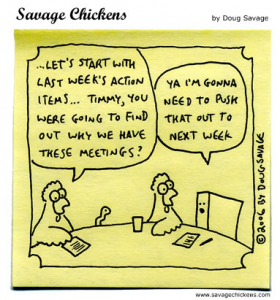
I think we let that ‘familiarity’ aspect of the chemistry between the 5 of us get the best of us. Our ops meetings slowly turned into a ‘how’d the weekend go?’ and took on more of something I hate: an unproductive ‘status meeting’ where we updated a few top line goals and then passed the baton to the next co-founder. Ugh!
Let me remind you – one of the main reasons Dasheroo exists is because, during a stint at another company, I turned one of those ‘status meetings’ into what I renamed the Triple S (Sell Some S*^t!). And what that meant was that everyone in the meeting reported on their main KPIs, how each person’s activities affected the others and overall, how we could work together to make sure what we were focused on really helped drive business success.
So, the new format? KPI driven (what tool do you think we’ll use to report on those?!) with an accountability and group brainstorming perspective.
So here are the key business analytics we now focus on, and they should be obvious:
- Website sessions and key sources
- # signups (SU)
- SU conversion rate
- % SU who connected an Insight (this is an indicator of activity and engagement)
- Conversion rate to a paid plan – We’ll expand this into a cohort analysis
- Churn (we need to define this)
- Revenue
The result after the first few ‘revamped’ ops meetings? Tremendous. For instance, as Janine was talking about the growth of our SEO and how our keyword targeted landing pages are helping capture mid to long tail traffic, James our VP Engineering noted that we should build a developer-focused landing page. Great! And that’s just one small win.
If this format sounds obvious, maybe you’re ahead of the game. But I challenge everyone reading to take a fresh look at your periodic (our is weekly) ops-style meeting and see if you are digging into and discussing your key performance indicators, and how you as a team can maximize your success.
Related posts:
 How To Manage Data Dashboards for Multiple Clients or Teams in Dasheroo
 Track Our Startup: Tracking Internal KPIs + Customer Success
 Startup Lessons Learned – Our First Quarterly Sales Plan
Startup Lessons Learned: Have Your Investors & Advisors Work For You
Startup Lessons Learned – Our First Quarterly Sales Plan
Startup Lessons Learned: Have Your Investors & Advisors Work For You
 Dasheroo Demoing Lightning App Builder at Dreamforce