Startup Lessons Learned: Take a Weekend Off!

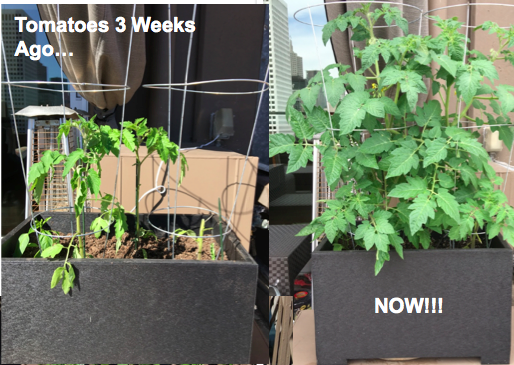
As startup types, we all tend to work pretty damn hard. And we need to, no matter how productive we are, there’s always more important stuff to get done. And I’m my own worst enemy, I support my folks in work/life balance but don’t ascribe to that too much myself. I’m lucky I guess that my wife (Janine our CMO) is the same way AND we don’t have kids. But that can lead to serious burn out and really a lack of focus that can sneak up on you. So last Friday afternoon, I just said “F it, I’m gonna shut down, have a glass of wine and chill.”Dasheroo tomatoes!

That extended into a full weekend of nothing but a quick check of Dasheroo email a couple times a day. So what’d I do with all this free time? Breathed! And gardened. Janine and I visited the best gardening store in San Francisco, Flora Grubb and picked up some lavender, succulents, a ton of herbs and even some tomatoes (we were told they may not be able to grow on an SF patio, BOB:-). We spent the afternoon potting and planting. It was relaxing, therapeutic AND productive. But personally productive! By the end of the weekend our little deck was tricked out complete with a drip system.

The cool thing was the project actually had a clear beginning and completion with the installation of the drip system. Oftentimes in tech the ‘end’ never seems to come.

When Monday rolled around, I was more refreshed than usual, and very energized to dive back into all the cool stuff we need to do for Dasheroo.

This weekend? Well, we’re busy cranking out cool stuff for our users so I’ll be back on the Dasheroo weekend shift, but for sure taking some quality time to go out on the deck and tinker in our garden. On this Friday, consider winding down a bit early and putting some time into doing nothing, or doing something non-work related. And let me know how you feel Monday!

Startup Lessons Learned: Business Freemium Model

Here at Dasheroo, we embraced a business freemium model to help drive the growth of our business. That means instead of relying on advertising on Google Adwords or other venues, we offer a tier of service for free. The premise is that freemium will drive risk-free adoption that will in turn generate awareness and positive word of mouth, or viral growth, without advertising.

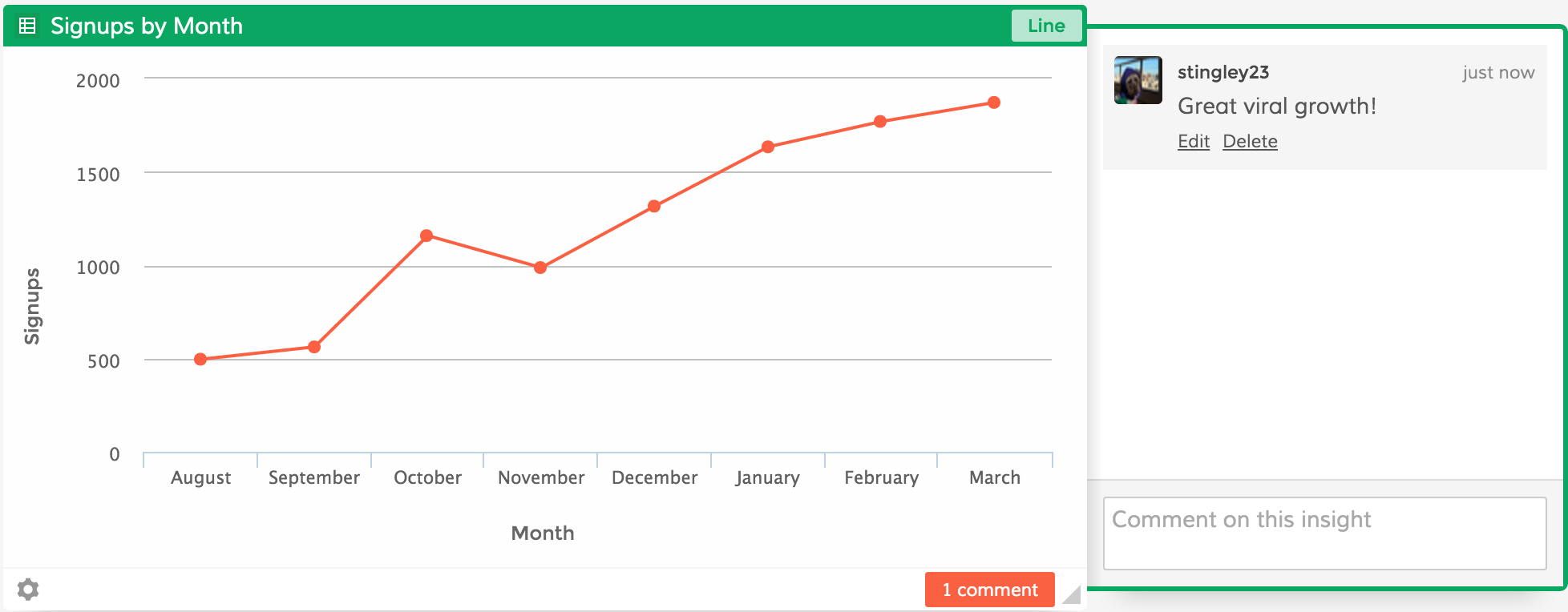
It’s a big bet. There’s lots of success stories (Slack, Mailchimp, Box, Evernote) but also some folks in our space who have switched from freemium to a standard free trial model (Sumall). Many of the switchers to free trial are mainly focused on the Enterprise, and as opposed to consumer freemium, business freemium typically takes longer to catch on. So how’s it working for Dasheroo in the early stages? Well, let’s look at this nifty Google Sheets dashboard:

business freemium growth

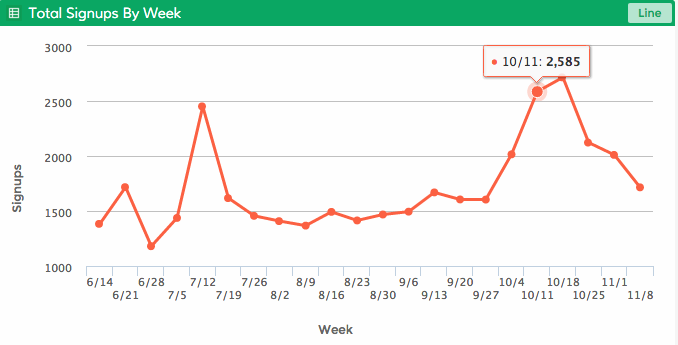
Early on, we were a very ‘hit driven’ business. We were very dependent on getting influencers to talk about us, and link to us, and we did a ton of 1:1 outreach. We were fortunate to get superstars like like Eve Mayer the LinkedIn Queen to talk about us on social media, and MatthewToren to write a great article about us on Entrepreneur. You can see the spike we got in October from that.

But these days we find ourselves simply growing more organically. We send an email to every new user asking them how they heard about us and why they like us and and we get about aa 20% response rate. From their answers we get an increasing number of people telling us they heard about us from a colleague or at a conference. All of this thanks to what we hope is a great product and user experience.

So, the big question: does business freemium replace salespeople? Nope. But about 10% (and growing) of our new users are large companies that feed our higher-value deals via our sales team. Just a few months ago, that percentage was less than 3%!

So, is business freemium is working for us? We think so at least at this early stage!

Startup Lessons Learned: Go for a Drive!

Mini Cooper DashboardsWho drives anymore?! The other day, I hopped in the old Mini Cooper for a meeting in Burlingame and it had been so long that the battery was dead! So I pulled up Uber and off I went, talking on the phone or checking email the entire time.
But just recently, Janine and I had to criss-cross a bit of the Tri-state areas of NY, PA and NJ and really the only way to get it done was renting a car and getting behind the wheel.
So there we were, driving up the Saw Mill Parkway from Manhattan to Dover Plains staring at our dashbords. And you know what – we were actually unplugged and…wait for it…talking! And yes, talking a fair amount about Dasheroo. Instead of nose-down in our Macs. It’s amazing how some F2F brainstorming can benefit your biz.
So in about 1 1/2 hours we didn’t just talk, we decided on:
  • putting a pop-up sign up form on each page of our blog, with a tailored headline based on the blog topic (it’s working great!)
  • a new way to access & visualize custom internal data for our users on their dashboards
  • a potential new product offering & revenue stream

So an average of 30 minutes per idea? I’ll take that any day! Maybe we should just drive around more often and talk about dashboards, but I’ll tell you – Manhattan (or SF for that matter) traffic is not the most conducive, go out to the country!

Startup Lessons: Setting Quotas for SaaS Salespeople

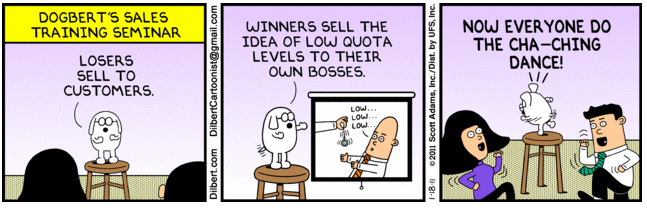
Sales cartoon - Dilbert

Image: Dilbert

Here at Dasheroo, 2016 is the year of sales! We launched our business dashboards mid-year 2015 and spent much of the
balance of the year adding more data sources, reports and other cool features. We’ve also been knee-deep, or maybe ‘ear-deep’ in listening to what our target users need in order to derive value from us. Because where value lies, sales happen.

And for sure, we earned some great customers in 2015. But now we have tons of learnings to leverage and an entire year to rock the sales machine.

So the next logical challenge is: how the hell to set aggressive, yet achievable, goals for my growing sales team that both challenges and fairly rewards them in our software-as-a-service (SaaS) model?

First you have to match your offering, complexity of sale and price (Annual Contract Value) to the appropriate level of sales person and their compensation. Meaning, don’t hire a 15-year enterprise sales veteran to sell a $3,000 per year SaaS deal. The math just won’t work. But typically that’s not an issue, as any enterprise sales person worth a damn wouldn’t take that job. The reverse can sometimes bite you though – don’t cheap out and hire a junior salesperson hoping they’ll land $1MM deals.

Here’s some top considerations:

  • Market segment(s) you are selling to. For instance, we sell to a lot of agencies, so we have a salesperson who has experience speaking to and selling into that unique market.
  • Type of sell. Is it a “1 call to close” or more of a traditional sale that goes thru the lead-qualify-demo-nurture-negotiate-close process. We’re hiring an SDR (Sales Development Rep) at a relatively low compensation package to handle the former type of sale, and our more experienced folks for the more process-driven sales.
  • Annual Contract Value (ACV). Typically the higher the ACV, the higher the quota and the higher the compensation you’ll pay a salesperson to generate those sales. And if you’re selling in to several segments (agencies, mid-size teams and enterprise) each will have its own ACV.
  • On Target Earnings (OTE). This is the total compensation (salary + commission) you’ll pay at each level. You may have to do some competitive research or speak with some industry colleagues. I’m lucky to have Rob Brewster, a kick-ass sales executive as an advisor. Bottom line, you have to have at least a ballpark on what sales folks are making at the low through high levels.

Once you have that baseline information nailed, it’s time to generate some quotas (your SaaS quotas should be on Annual Recurring Revenue). For SaaS businesses, the general guideline is to apply a multiplier of 3-4X to OTE. Here’s a quick example:

example of software as a service sales rep quota

Here, we began with estimated OTE for each level of sales, and applied a 3.5X OTE multiplier to arrive at the annual sales quota. Then you need a reality check based on average deal size (Target ACV). You have to balance that against the number of deals they’d have to close in a month or quarter to achieve that goal.

If it seems realistic, you’re onto something! If not, you need to take another look at one of your drivers: your pricing and ACV, your compensation plan or how you can accelerate the number of deals that can be closed in each month.

That’s why setting quotas for your SaaS salespeople is both a science and an art, as you can use some industry benchmarks as a framework for your plan, but it’s typical to nudge them a bit to create a reasonably aggressive plan that fits your business.

There’s a lot of other smart advice out there on this topic. Venture guy Jason Lemkin has written several excellent articles, and I learned a lot from him while establishing our plan.

What’s your experience, challenges and success creating your SaaS sales plan and setting quotas for your sales team? Let me know!

Startup Lessons: Your Go To Market Strategy

Screen Shot 2015-12-27 at 11.51.27 AMWhat’s a Go To Market strategy, you ask? Simple in concept, it translates to this: how you are going to achieve world domination for your business! It’s what I’m knee-deep in planning here during the holidays. It’s actually GTM V2, as we did an initial plan last year but we’ve learned a lot since we launched in May, and it’s time to revisit and go into more detail for 2016 and beyond.

A successful GTM plan should address these 5 main factors:

  • Target market segment(s) – discrete definition of who you are selling to
  • Channels – how you are going to reach them
  • Messaging – the problem you solve for each segment, in real world terms
  • Pricing & Packaging – ‘the value’, right-sized to each segment
  • CAC Model (Customer Acquisition Cost) – how your sales & marketing costs balance against new sales

And what you use your GTM for:

  • Guide your pricing strategy
  • Identify your key business drivers
  • Develop your financial model
  • Align your team around clear goals & priorities
  • And, if you are planning on raising money, it ill be a key component of your investor presentation

In 2015 we proved out an important keystone of our GTM: With virtually zero advertising, we attracted 10,000+ users in over 110 countries. We did this building a great foundation of product, freemium offering, lots of content and search engine optimization and that lovely thing called word of mouth. We also proved out that a certain amount of them would find us valuable enough to pay us.

That’s great, but 2016 is really our year of GTM. The difference to 2015 is attacking each of our audience segments with a specific channel, messaging, pricing and sales plan.

Fortunately, our founding team have all built successful startups so it’s not our first rodeo. But it is the first time we’re laying out the groundwork for our global domination at the level of detail we are now. It’s challenging, fun and frustrating all at once. There’s a lot of moving parts and a lot of hard decisions to make.

We also have the good fortune to be able to lean on Judy Loehr from our lead investor Cloud Apps Capital Partners. Judy has GTM in her DNA, let’s just say. She recently spoke at Zuora‘s Subscribed 15 Growth Conference, where she explained the necessity of developing a solid GTM, or perish.

So, whether you’re a startup like Dasheroo, or a more mature company, do you have a solid Go To Market plan for your business? If not, you better get on it, because especially in the tech world, your competition probably does!

Startup Lesson: Business Process Focus – When Your Team Is Under Water

Cartoon about business process for business dashboard startup DasherooAhh, start-up land…finite resources and infinite things to get done! And all of those projects can appear to be critical to your success – or survival – right now. And if you don’t have a clear business process, you and your team can feel, well, under water.

At our business dashboard startup Dasheroo, we’re so excited to launch new features, integrate with more applications, get more traffic in the door and improve our in-app experience, that it can be dizzying at times.

And recently, I started to feel the springs almost starting to pop. You’ve probably been there, too. Progess? Sure, but not enough projects getting pulled over the finish line. Too many projects stuck in that ‘WIP’ category for too long.

And when that starts to happen, it’s time to reboot! And that means regrouping with the team, having an open discussion, focusing on the real priorities (maybe re-prioritizing), a real business process and executing.

We had a great meeting recently, where we revisited each major deliverable for Q4 across marketing, product, sales and engineering. It resulted in us taking a few things off of our plate, at least for now. Just agreeing that “we’re not gonna do that” this quarter. Or, “we thought that feature was really important a few months ago, but now that we’ve learned more it really isn’t mission critical’” It’s sobering, necessary and productive.

So what are some of the actions we took?

  • We delayed one big engineering project to Q1, and re-scoped another one that dramatically reduced (almost eliminated) additional engineering time. That meant we can focus on and complete a couple immediate revenue-generating projects – Insight alerts, branded dashboard exports and an agency & partner console that were all stuck in that ‘we’re almost there’ category.
  • We took a hard look at which social media and content outlets were providing us the best (and worst) results, and adjusted our publishing schedule to optimize the time spent on writing and socializing articles so we could spend more time developing a pricing test and a new onboarding experience.
  • We decided to take a couple app integrations off the Q4 table and focus on two key integrations that are more deep, more valuable and focused on driving user acquisition in a key market.

Although these discussions usually come a little too late, it’s the nature of the beast. I’ll try to get a better read on the ol’ ‘under water’ crystal ball, but the bottom line is addressing these issues immediately, getting everyone on the same page, and executing!

How do you identify and resolve business prioritization in your company? Let me know!

Startup Lessons Learned: Establishing Conversion KPIs

Dasheroo's internal sign up dashboard

Just one of the many KPIs we track at Dasheroo.

A couple weeks ago, I wrote about users vs. customer experience, where I shared my thoughts about the importance of each, and discussed one of the ways we measure customer experience. It’s via a KPI we have called ‘app engagement’.

Well, that’s just one critical juncture in the customer journey, and we measure several KPIs to make sure we’re on the right track.

So the team has been working hard to nail these down, and I thought I’d share them with you. Maybe they can help you establish or rethink yours, or maybe you have an idea or two that you can take away!

Here we go, the following are the Key Performance Indicators for Dasheroo:

  • Signup (SU) = a website signup for a Dasheroo account
  • SU % = # SU/Users to our website and blog (note: we remove any Dasheroo account holders from our Google Analytics ‘User’ value)
  • Connected users = SUs that connected 1+ Insights within 24 hours
  • Connected % = Connected users/SU in that week
  • Engaged users = Connected users that were active in their account in past 7-14-21-30-60 days (note: we measure engagement at multiple timeframes and also have cohort reports to pinpoint any big drop off points and to correlate activity with product releases)
  • Engaged % = # Engaged users/# Connected users in past 60 days
  • Disengaged users = Connected users not active in their account in 60 days
  • Disengaged (or Free Churn) rate = # disengaged within 60 days / #of total connected at beginning of the that 60 day period (this could also be referred to as our ‘Freemium Churn’ rate; how many people did not see the value of our offering)
  • FTC = # first time customers
  • Average Revenue Per User (ARPU)= Monthly revenue/Total paid customers
  • Monthly Recurring Revenue (MRR) = All paying customers * ARPU
  • Churn = # Paid cancels in month
  • Churn rate = Paid churn/total paying customers at the beginning of that month (note: you want to make sure not to include any new FTCs in that month)

Whew! Sure that’s a lot to measure but we feel, at least for now, that these accurately capture and gauge our performance in driving our users through the ‘conversion funnel’ from initial account signup to the holy grail: a paying customer.

And of course now we are developing custom insights for all of these to be shown and continually updated in our business dashboards.

How do you measure your business performance – have you established KPIs that help you identify where your strengths and weaknesses? Let me know!

Startup Lessons Learned: Harmony Sucks!

let's settle this like adultsOK, sure – harmony can definitely be a great thing. But I thought ‘harmony sucks’ might get your attention! And I do believe that harmony sometimes really can suck: it can suck your ability to confront potentially thorny, uncomfortable issues with your team, partners and investors. Which in turn sucks the productivity out of your business.

The Heat is On!

Several years ago, this really hit home for me. The software company I ran a large division of had just acquired another software company of 100 or so people in Iowa and I took over running it. One of the first meetings we had when I landed in Cedar Rapids was attending their exec ops meeting. I really didn’t know what to expect, so let them know I mainly wanted to watch and listen to a typical meeting, and begin to participate after a meeting or two.

I’d never been in a meeting where there was so much heated debate! It even made me a little uncomfortable. People were fighting for their own P&Ls. Making the case for (always) limited resources to be directed to their cause. And they immediately drew me in for my perspective, which I provided by explaining how their goals flowed into the new parent company. And we had some great back and forth on my views too, which we all benefited from.

At the end of this 2-hour meeting, even though everyone didn’t get their own way, the team came away with a clear understanding and respect of ‘why’ the decisions were made, and everyone bought off and got behind getting those actions done. Later, I asked the controller JoAnn if that was a common exec ops meeting, and she assured me that ‘yes’, they approach each of those meetings very seriously, but with mutual respect and always a clear understanding of the tactics and strategy that maximizes the vale of the business. And sometimes it gets heated, and sometimes it doesn’t.

I’ve tried to apply that way of thinking and acting since then.

The Board is Not Bored

We have the best investors I’ve ever been involved with, and the sharpest board as well – board members and advisors alike. At a recent board meeting, we had our most ‘spirited’ meeting yet. Yeah, it even got a little contentious around our discussions on product and my approach to target markets. And you know what? It was our most productive board meeting yet! We all have passion, and that passion came through in very candid discussions around maximizing the value of Dasheroo. We came away with a clear understanding of each other’s views and an action plan we all could get behind and execute on. And most importantly, we all showed the respect we have for each other.

It reminded me that I need to apply ‘non harmony’ not to just our exec ops meetings more often, but in our daily work routine as well; sometimes everyone would rather just ‘get along’ and not surface an issue that may lead to conflict rather than dive into and resolve the thorny issues that are bound to arise in any company.

Question the Boss, They Don’t Know it All

I used to consult for a public company that was stuck in the passive harmony state. I quickly decided to leave, as no one wanted to stand up for what they believed was the in the best interests of their customers. They’d just all do what ‘the boss’ said, and go about their day, never achieving things that they felt were important. It was like living a Dilbert cartoon! Yup, it can infect big ‘ol companies too, probably more often than scrappy ‘lil ones like Dasheroo.

Startup Lesson Learned

It’s easy to go with the flow, and maybe not confront an issue that is really important to you because it might ruffle feathers. You may have to go the extra mile to defend your position, it may not be popular, and you could even lose your argument. Whatever. Get over it. If it’s in the best interest of adding value to your customers and your business, stand up for what you think is important. But also, know where to draw the line, and pick your fights wisely. Too much conflict can also destroy your team’s passion and productivity. And always: show respect.

John@Dasheroo
Co-founder

Startup Lessons Learned This Week: The Power of ‘No’

Image for the Dasheroo Power of No article.As I mentioned in Startup Lessons Learned in the past couple weeks, we’ve launched our pricing and our billing solution. So now that we can actually charge people, we’re getting into sales discussions with agencies and larger companies who are interested in our business dashboards solution. It’s exciting!

That said, we just launched Dasheroo on May 5, so we’re still early on and we don’t yet have all the features and functionality that more advanced users like agencies or consultants want. Features like co-branding our app, dashboard exports, and user roles and permissions.

So, just this past week I’ve been in the unenviable position of having to say ‘No’ (more on that below) to several excellent prospects. “Do you have co-branding?”, “Can I export your dashboards to a PowerPoint?”, “Can I make this dashboard read-only?”

‘No’, we don’t have any of those features yet. Years ago I would have freaked out to not have a pocket full of “Yes” to respond with. I would have felt like a loser, and the pressure to close a sale now would have been immense.

But there are benefits of this powerful, and sometimes feared, word. Let’s take a closer look at ‘No’:

  • It shows some real honesty & confidence; people appreciate that.
  • You can sometimes turn a ‘no’ into a thank you, when the request sounds reasonable but you’re just not sure if you’ll ever get around to it. Occasionally we’ll receive feature requests than actually sound great, but not for the near term. So it’s not a ‘no’, it’s a “Thank you for your suggestion. This feature isn’t on our near-term roadmap, but I’ll get it in front of our product folks to review…”. And we do review each feature request we receive.
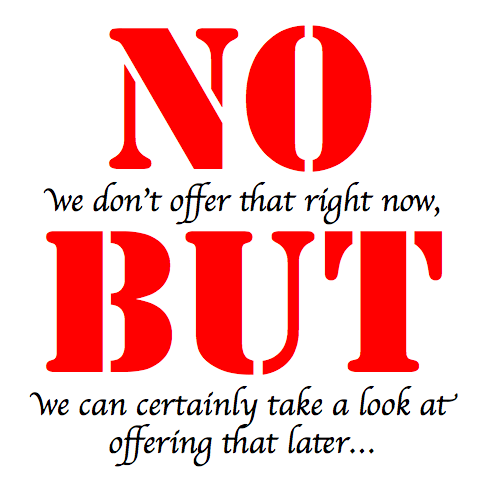
  • ‘No’ can often be communicated as ‘Not yet or ‘No, but…”, if that is an accurate statement. For instance, co-branding, dashboard exports, and advanced user roles and permissions are in fact on our near-term product roadmap. People will be patient if they believe that your goals are aligned and you’re open with them.
  • Sometimes a firm ‘No’ is warranted. In the case where one customer may be forcing feature demands on you that will not value the balance of your users, or is just something you feel strongly is not in your best interests. Jason Freid of Basecamp wrote a great article a few years ago, where he noted that a customer requested they provide Gantt Charts as part of their Basecamp project management offering. He duly noted that many other companies already provide Gantt Charts and it’s not something they will ever consider.

After several agency and larger company meetings the past week or so, the results are interesting and encouraging. People genuinely like our user interface, ease of use and pricing. That’s the core of our value proposition. So when we discuss upcoming features and functionality with these folks, we’re driving toward a mutually beneficial solution and inviting them to help define that solution. Plus, we’re often able to provide some short term workarounds in the meantime.

So can forms of ‘No’ actually get you to a yes? It’s looking promising, plus it ensures that we stay true to our product vision, which hopefully will benefit all of our users for years to come.

What’s your take on the pros and cons of ‘No’? Let me know!

Startup Stories: Lessons Learned This Week

This is an exciting week! After several weeks of heads-down development and product work, we’re about ready to release our billing functionality. Maybe that doesn’t sound sexy, but to us it’s where the rubber meets the road…will people pay for Dasheroo? Many have said they will be happy to, so let’s see.

But that’s not the startup lessons learned this week; it’s obvious when you are starting a business that you need to charge for your service. But there’s actually several lessons that this billing project has taught me, and I’m going to focus on a key one now, one that I learned at my last start-up and one that is being reinforced in my experience at Dasheroo.

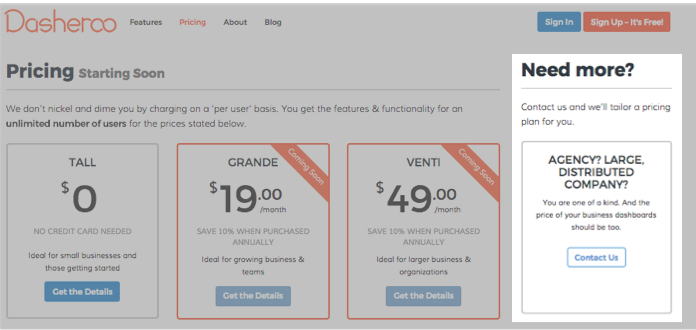
Dasheroo's diversified sales strategy.

At Dasheroo we’re planning on diversifying our sales to different targeted audiences…are you?

And that lesson is that even with an SMB-focused offering, there’s a huge importance of establishing ‘larger company/enterprise’ sales efforts at the get-go. If that seems contradictory, hear me out. Here are my top 3 reasons we’re pursuing this strategy at Dasheroo:

1) Cash flow: In a business freemium model like we have, it takes a lot of $19 per month transactions to make a dent in the cash burn of our business dashboards company. Sure, it’s vital to build what we call the ‘auto-convert’ side of the business and establish our conversion metrics so we can begin modeling out what the business will look like 3-5+ years down the road. But I was reminded of my experience at my last start-up, VerticalResponse, of the value in generating cash NOW.

Similar to Dasheroo, VerticalResponse catered to the SMB market, providing a self-service email marketing platform. Most users paid less than $15 per month, and we knew we needed to offset our cash burn faster than those smaller sales could support. So we targeted companies with large email lists – e-commerce companies for example, that were happy to pay us thousands of dollars per month for the great email deliverability and VIP support we’d provide.

2) Diversification: Although the global small-midsize business market is well diversified with tens of millions of companies – we already have users in 100 countries from a gay pride foundation in Montenegro to a beauty school in Indianapolis to a dev shop in Guadalajara. But I’m talking more macro-level diversification from a sales perspective. Larger companies behave differently. They tend to buy on an annual vs. monthly basis. They tend to like ‘per user’ pricing and VIP support. All items that provide value to our larger customers that we are then able to charge a premium for.

3) Long term sustainable growth & value: This is an issue that really surfaces after you have achieved a level of success selling to SMBs. The spigot of early adopters tend to dry up a bit over time, and it becomes increasingly difficult to sustain the high sales growth rates of the early days. And ‘increasing at a decreasing rate’ isn’t something anyone wants to hear.

So have we landed a ‘whale’ yet? Nope, but we’re in advanced discussions with a few that we hope to come to agreements with soon. And it’s not just good for cash flow, it’s great for internal morale and to position Dasheroo for a better chance of providing long term value to our investors, and potential acquirers.

One note – take caution that one ‘whale’ doesn’t pull you out to sea with one-off feature demands that aren’t scalable to the majority of your user base! Happy fishing.